Qin Dynasty Cultural Relics Sword-holding Terracotta Warriors and Horses

Qin Dynasty Cultural Relics Sword-holding Terracotta Warriors and Horses
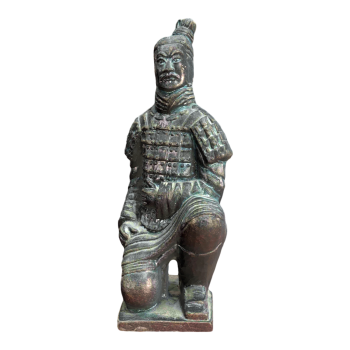
The Terracotta Warriors and Horses sculpture depicts the army of Qin Shihuang, the first emperor of China. It is a martyrdom art, buried with the emperor in 210-209 BC, with the aim of protecting Qin Shi Huang in the afterlife.
Terra Cotta Warriors in the Mausoleum of the Qin Emperor

Terra Cotta Warriors in the Mausoleum of the Qin Emperor

The Terra Cotta Warriors, namely the Terra Cotta Warriors in the the Mausoleum of the First Qin Emperor, also referred to as the Terra Cotta Warriors or the Terracotta Warriors, are the first batch of national key cultural relics protection units and the first batch of Chinese world heritage sites. They are located in the Terra Cotta Warriors pit 1.5 kilometers east of the the Mausoleum of the First Qin Emperor in Lintong District, Xi'an, Shaanxi Province. More than 200 foreign heads of state and government have visited and toured, becoming a golden business card of China's ancient glorious civilization and also known as one of the world's top ten rare ancient tombs.
Kneeling Terra Cotta Warriors

Kneeling Terra Cotta Warriors

The Terra Cotta Warriors in Shaanxi are world-famous, with thousands of people and thousands of faces. Among them, the kneeling and shooting figurines in Pit 2 of the Terra Cotta Warriors are the best. He knelt on his right knee, crouched on his left leg, and his eyes were bright and focused forward. His cold and stern face, as well as his fierce and heroic spirit holding a bow and crossbow, seemed to be the best interpretation of Qin Shi Huang's achievement of unified hegemony. When visiting the Terra Cotta Warriors Pit, tour guides and museum interpreters often say, "On the map of China's political districts, Shaanxi is like a kneeling shooting figurine."
Terra Cotta Warriors

Terra Cotta Warriors

The Terra Cotta Warriors is a category of ancient tomb sculptures. In ancient times, human sacrifice was practiced, and slaves were considered as accessories of the slave owner during their lifetime. After the slave owner's death, the slaves were buried as sacrificial objects with the slave owner. The Terra Cotta Warriors are burial objects in the shape of soldiers and horses (chariots, horses, soldiers). It is an important part of the first batch of national key cultural relics protection units and the world cultural heritage "Mausoleum of Qin Shi Huang and Terracotta Warriors".
Kneeling Shooting Terracotta Warriors

Kneeling Shooting Terracotta Warriors

The kneeling shooting terracotta warrior is dressed in a battle robe and armor, with a bun tied on the left side of their head. Their feet are aligned with the square mouth and their head is raised with pointed shoes. Their left leg is crouched and bent, their right knee is on the ground, and their upper body is slightly turned to the left. Their hands are raised and lowered on the right side of their body in a bow holding posture, showing a solo practice movement of holding a bow. In the sculpture art of kneeling and shooting terracotta warriors, one thing that is very valuable is that their shoe soles and meticulously crafted stitches reflect an extremely strict realistic spirit, allowing future viewers to feel a strong sense of life from the Qin Dynasty warriors. Among all the Terra Cotta Warriors unearthed, the kneeling shooting Terracotta Warriors are the only Terra Cotta Warriors that were extremely complete when they were found.
Armored warrior figurines from the Sixteen Kingdoms period (collected by Xi'an Museum)

Armored warrior figurines from the Sixteen Kingdoms period (collected by Xi'an Museum)

The Sixteen Kingdoms (304-439 AD) was a period of great division in Chinese history. This period began in 304 when Li Xiong and Liu Yuan respectively established Chengguo (Chenghan) in the Han region of Bashu and Han Zhao (Former Zhao) in the Central Plains, and lasted until 439 when Emperor Taiwu of Northern Wei, Tuoba Tao, conquered Beiliang and unified the north.
Terra Cotta Warriors

Terra Cotta Warriors

The Terra Cotta Warriors, namely the Terra Cotta Warriors in the the Mausoleum of the First Qin Emperor, also referred to as the Terra Cotta Warriors or the Terracotta Warriors, are the first batch of national key cultural relics protection units and the first batch of Chinese world heritage sites. They are located in the Terra Cotta Warriors pit 1.5 kilometers east of the the Mausoleum of the First Qin Emperor in Lintong District, Xi'an, Shaanxi Province. More than 200 foreign heads of state and government have visited and toured, becoming a golden business card of China's ancient glorious civilization and also known as one of the world's top ten rare ancient tombs.
Terra Cotta Warriors

Terra Cotta Warriors

On March 29, 1974, farmers dug a well about 1.5 kilometers east of the the Mausoleum of the First Qin Emperor in Lishan Mountain and found the Terra Cotta Warriors. Lishan is an area filled with underground springs and waterways. For centuries, there have been occasional reports of pottery figurines and fragments from Qin tombs - roof tiles, bricks, and large blocks of bricks and stones. This discovery prompted Chinese archaeologists, including Zhao Kangmin, to investigate and reveal the largest group of pottery figurines in history. Afterwards, a museum complex was built in the area, with the largest pit surrounded by a roofed structure.
Terra Cotta Warriors

Terra Cotta Warriors

World Cultural Heritage, the golden business card of China's ancient glorious civilization. Terra Cotta Warriors is a category of ancient tomb sculptures. In ancient times, human sacrifice was practiced, and slaves were considered as accessories of the slave owner during their lifetime. After the slave owner's death, the slaves were buried as sacrificial objects with the slave owner. The Terra Cotta Warriors are burial objects in the shape of soldiers and horses (chariots, horses, soldiers). In March 1974, the Terra Cotta Warriors were discovered. In 1987, Mausoleum of Qin Shi Huang and Terracotta Warriors were approved by UNESCO to be included in the The World Heritage List, known as the "eighth wonder of the world".
"Terra Cotta Warriors and Horses and Troops"

"Terra Cotta Warriors and Horses and Troops"

The Terra Cotta Warriors, namely the Terra Cotta Warriors in the the Mausoleum of the First Qin Emperor, also referred to as the Terra Cotta Warriors or the Terracotta Warriors, are among the first batch of national key cultural relics protection units and the first batch of Chinese world heritage sites. A charioteer refers to a soldier on a chariot, excluding the rider and driver. There are usually two soldiers on a chariot, namely the left chariot figurine and the right chariot figurine. The figurine on the left side of the carriage is dressed in a long robe, covered in armor, with leg guards on the shin and a crossbeam on the head. It holds weapons such as spears, spears, and halberds in its left hand, and presses the carriage in its right hand. The attire of the figurine on the right side of the car is the same as that of the figurine on the left side, but the posture is opposite. They are both the main force of tank warfare, but according to literature records, they have certain differences in weapon configuration and combat responsibilities.
Terracotta Warriors and Horses of the Qin Dynasty

Terracotta Warriors and Horses of the Qin Dynasty

In terms of identity, it is lower than the general figurine and can be classified as intermediate or lower level. The number of Qin terracotta warriors in the pit is extremely small, with less than ten unearthed, divided into two categories: the warrior robe general terracotta warriors and the armored general terracotta warriors. The armored general figurine appears to have a double or single crown on its head, and there are several different forms of armor worn. The terracotta warriors in battle robes are dressed in plain attire, but have floral knots on their chests. The front, back, and shoulders of the armored terracotta warriors are adorned with eight colorful floral knots, which are gorgeous, colorful, and elegant, highlighting their rank, identity, and majesty in the military.
Ornament Crafts Xi'an Tourist Souvenirs Qin Terracotta Warriors Qin Shi Huang Clay Figurines Clay Sculptures Single Terracotta Warriors

Ornament Crafts Xi'an Tourist Souvenirs Qin Terracotta Warriors Qin Shi Huang Clay Figurines Clay Sculptures Single Terracotta Warriors

Xi'an Cultural and Creative Tourism Souvenir Terra Cotta Warriors, Terracotta Warriors and Horses, General Terracotta Warriors, Kneeling Shooting, Mercenary Sand and Stone Table Decoration

Xi'an Cultural and Creative Tourism Souvenir Terra Cotta Warriors, Terracotta Warriors and Horses, General Terracotta Warriors, Kneeling Shooting, Mercenary Sand and Stone Table Decoration

The Mausoleum of the First Qin Emperor Vertical Shooting Figurine

The Mausoleum of the First Qin Emperor Vertical Shooting Figurine

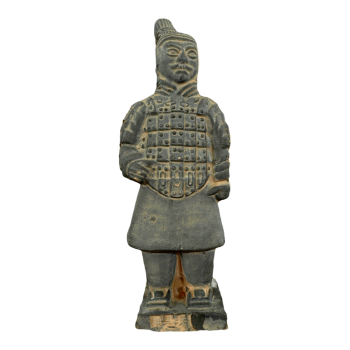
The standing shooting terracotta warriors are a relatively special type of soldier among the Qin terracotta warriors, unearthed in the eastern part of Pit 2. They carry crossbows and bow weapons, and together with kneeling shooting terracotta warriors, form a crossbow army formation. The standing shooting figurine is located on the formation table, dressed in light military robes, tied up in a bun, with a leather belt tied around the waist, and square toed pointed shoes on the feet. The attire is light and flexible.
Terracotta Warriors and Horses of the Qin Dynasty
Terracotta Warriors and Horses of the Qin Dynasty

The Terra Cotta Warriors, namely the Terra Cotta Warriors in the the Mausoleum of the First Qin Emperor, also referred to as the Terra Cotta Warriors or the Terracotta Warriors, are among the first batch of national key cultural relics protection units and the first batch of Chinese world heritage sites. A charioteer refers to a soldier on a chariot, excluding the rider and driver. There are usually two soldiers on a chariot, namely the left chariot figurine and the right chariot figurine. The figurine on the left side of the carriage is dressed in a long robe, covered in armor, with leg guards on the shin and a crossbeam on the head. It holds weapons such as spears, spears, and halberds in its left hand, and presses the carriage in its right hand. The attire of the figurine on the right side of the car is the same as that of the figurine on the left side, but the posture is opposite. They are both the main force of tank warfare, but according to literature records, they have certain differences in weapon configuration and combat responsibilities.
Terra Cotta Warriors in the the Mausoleum of the First Qin Emperor in Xi'an

Terra Cotta Warriors in the the Mausoleum of the First Qin Emperor in Xi'an

The Terra Cotta Warriors, namely the Terra Cotta Warriors in the the Mausoleum of the First Qin Emperor, also referred to as the Terra Cotta Warriors or the Terracotta Warriors, are the first batch of national key cultural relics protection units and the first batch of Chinese world heritage sites. They are located in the Terra Cotta Warriors pit 1.5 kilometers east of the the Mausoleum of the First Qin Emperor in Lintong District, Xi'an, Shaanxi Province. Terra Cotta Warriors is a category of ancient tomb sculptures. In ancient times, human sacrifice was practiced, and slaves were considered as accessories of the slave owner during their lifetime. After the slave owner's death, the slaves were buried as sacrificial objects with the slave owner. The Terra Cotta Warriors are burial objects in the shape of soldiers and horses (chariots, horses, soldiers).
Terra Cotta Warriors and Horses in the the Mausoleum of the First Qin Emperor in Xi'an - Terracotta Horses
Terra Cotta Warriors and Horses in the the Mausoleum of the First Qin Emperor in Xi'an - Terracotta Horses

The Mausoleum of the First Qin Emperor Terra Cotta Warriors is the tomb of Ying Zheng, the first feudal emperor in Chinese history (259-210 BC), located at the north foot of Lishan Mountain, 3.5 kilometers east of Lintong District, Xi'an, Shaanxi Province. The horse figurine is the same size as a real horse, with straight ears and wide open eyes, and full of energy. According to the archaeological survey, the Terra Cotta Warriors were arranged into an array, simulating the military establishment and fighting patterns during the period when Qin Shihuang unified the six countries. This array of Terra Cotta Warriors includes thousands of terracotta warriors, cavalry, generals and horses.
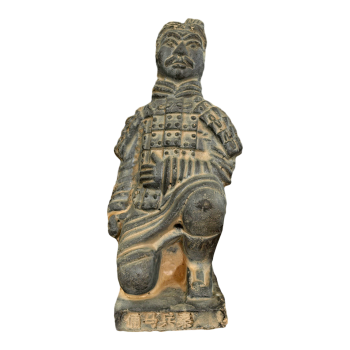
Terra Cotta Warriors in the the Mausoleum of the First Qin Emperor in Xi'an - Terra Cotta Warriors kneeling

Terra Cotta Warriors in the the Mausoleum of the First Qin Emperor in Xi'an - Terra Cotta Warriors kneeling

The Terra Cotta Warriors, namely the Terra Cotta Warriors in the the Mausoleum of the First Qin Emperor, also referred to as the Terra Cotta Warriors or the Terracotta Warriors and Horses of the Qin Dynasty, are among the first batch of national key cultural relics protection units, the first batch of Chinese world heritage sites, and are also known as one of the world's top ten rare treasures of ancient tombs. It is located in the Terra Cotta Warriors pit 1.5 kilometers east of the the Mausoleum of the First Qin Emperor in Lintong District, Xi'an, Shaanxi Province. Terra Cotta Warriors is a category of ancient tomb sculptures. In ancient times, human sacrifice was practiced, and slaves were considered as accessories of the slave owner during their lifetime. After the slave owner's death, the slaves were buried as sacrificial objects with the slave owner. The Terra Cotta Warriors are burial objects in the shape of soldiers and horses (chariots, horses, soldiers).
Terra Cotta Warriors in the the Mausoleum of the First Qin Emperor in Xi'an

Terra Cotta Warriors in the the Mausoleum of the First Qin Emperor in Xi'an

The Terra Cotta Warriors, namely the Terra Cotta Warriors in the the Mausoleum of the First Qin Emperor, also referred to as the Terra Cotta Warriors or the Terracotta Warriors and Horses of the Qin Dynasty, are among the first batch of national key cultural relics protection units, the first batch of Chinese world heritage sites, and are also known as one of the world's top ten rare treasures of ancient tombs. It is located in the Terra Cotta Warriors pit 1.5 kilometers east of the the Mausoleum of the First Qin Emperor in Lintong District, Xi'an, Shaanxi Province. Terra Cotta Warriors is a category of ancient tomb sculptures. In ancient times, human sacrifice was practiced, and slaves were considered as accessories of the slave owner during their lifetime. After the slave owner's death, the slaves were buried as sacrificial objects with the slave owner. The Terra Cotta Warriors are burial objects in the shape of soldiers and horses (chariots, horses, soldiers).
Terra Cotta Warriors in the the Mausoleum of the First Qin Emperor

Terra Cotta Warriors in the the Mausoleum of the First Qin Emperor

The Terra Cotta Warriors, namely the Terra Cotta Warriors in the the Mausoleum of the First Qin Emperor, also referred to as the Terra Cotta Warriors or the Terracotta Warriors, are among the first batch of national key cultural relics protection units, the first batch of Chinese world heritage sites, and are known as one of the world's top ten rare treasures of ancient tombs. It is located in the Terra Cotta Warriors pit 1.5 kilometers east of the the Mausoleum of the First Qin Emperor in Lintong District, Xi'an, Shaanxi Province. Terra Cotta Warriors is a category of ancient tomb sculptures. In ancient times, human sacrifice was practiced, and slaves were considered as accessories of the slave owner during their lifetime. After the slave owner's death, the slaves were buried as sacrificial objects with the slave owner. The Terra Cotta Warriors are burial objects in the shape of soldiers and horses (chariots, horses, soldiers).
Terracotta Warriors-Archers

Terracotta Warriors-Archers

The Terracotta Warriors and Horses, namely the Terracotta Warriors and Horses of Qin Shihuang Mausoleum, also referred to as the Qin Terracotta Warriors and Horses or the Qin Terracotta Warriors and Horses, is the first batch of national key cultural relics protection units and the first batch of Chinese World Heritage. It is located 1.5 kilometers east of the Qin Shihuang Mausoleum in Lintong District, Xi'an City, Shaanxi Province. Inside. Terracotta warriors are a category of ancient tomb sculpture. In ancient times, human martyrdom was carried out. Slaves were the appendages of slave owners before their death. Slaves were buried with slave owners as sacrificial objects after their death. Terracotta warriors and horses are made into the shape of warriors and horses (chariots, horses, soldiers).
Terracotta Warriors and Horses 3D Model AR

Terracotta Warriors and Horses 3D Model AR

The Terracotta Warriors and Horses, namely the Terracotta Warriors and Horses of Qin Shihuang Mausoleum, also referred to as the Qin Terracotta Warriors and Horses or the Qin Terracotta Warriors and Horses, is the first batch of national key cultural relics protection units and the first batch of Chinese World Heritage. It is located 1.5 kilometers east of the Qin Shihuang Mausoleum in Lintong District, Xi'an City, Shaanxi Province. Inside.